Commercial battery storage for peak shaving in Mauritius and the Indian Ocean
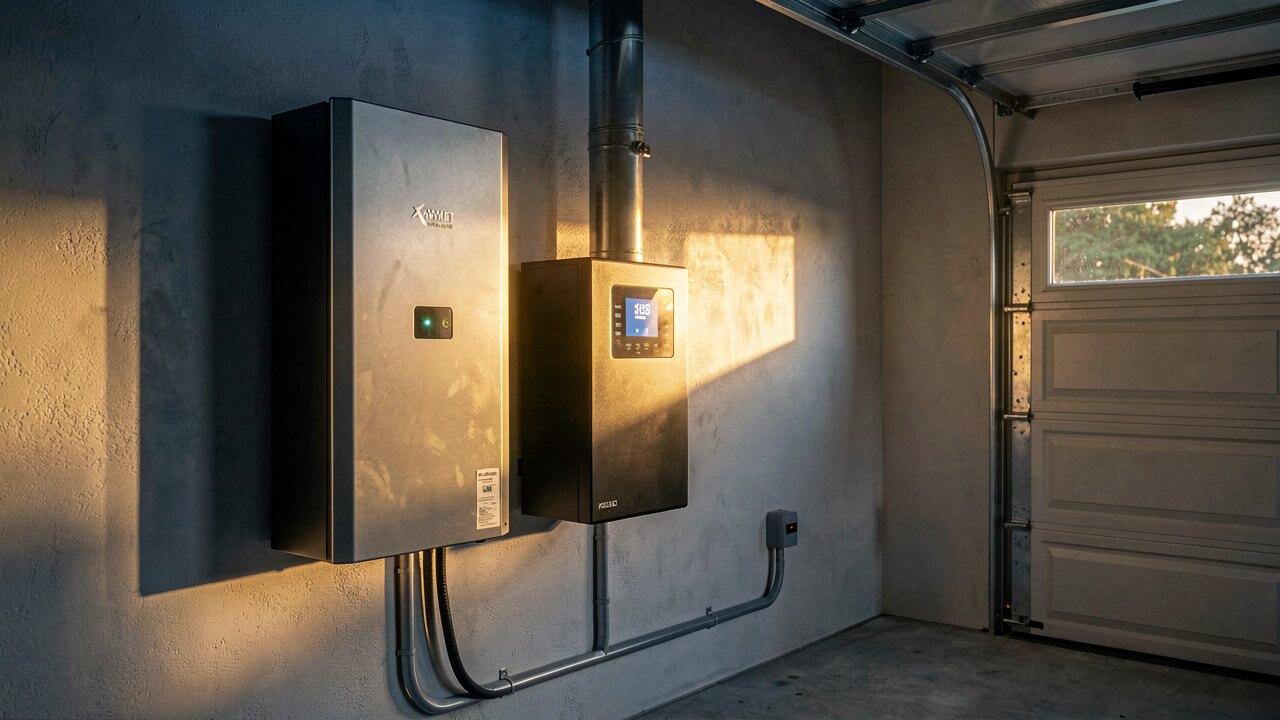
Peak shaving means discharging a battery during your short load peaks so the meter never records them, which lowers the maximum-demand (kVA) part of your bill rather than the energy part. This page explains exactly what that saves on a Mauritian commercial tariff, how to size the system in five steps, and what island conditions change about the hardware.
Commercial and industrial customers of the Central Electricity Board (CEB) in Mauritius are billed on two separate things: energy consumed (kWh) and maximum demand (kVA) recorded in the billing period. Maximum demand is set by your single worst interval — one chiller start, one laundry cycle and one kitchen block overlapping for a few minutes can define the charge for the whole month. A battery sits behind your meter, monitors the incoming power in real time, and discharges the moment load crosses a set ceiling. The meter therefore never sees the peak. Your kWh consumption is essentially unchanged (slightly higher, because of round-trip losses of roughly 10–15% on a modern lithium system); what falls is the kVA line. Savings are calculated simply: avoided kVA × your tariff's demand rate × 12 months. Take your own rate from your CEB bill — do not use a generic figure, because demand rates differ by tariff code and by island utility.
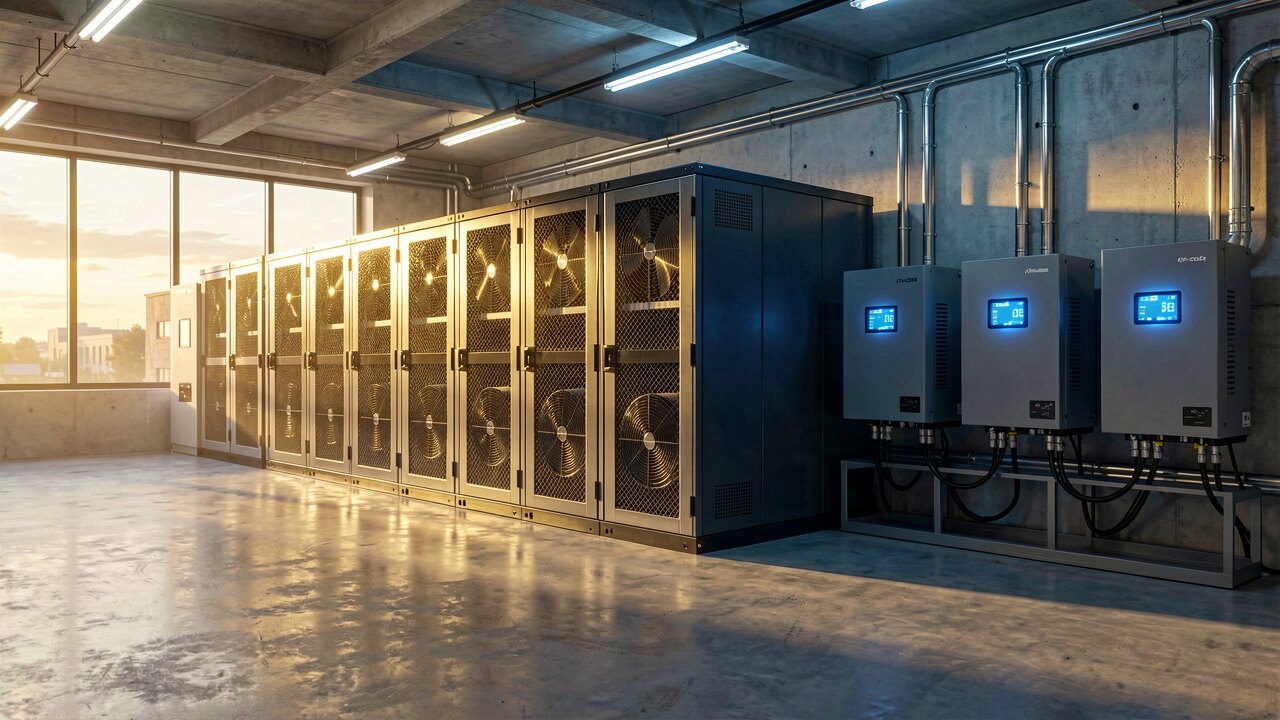
1) Get interval data. Ask CEB for your metered load profile, or install your own logger for at least four full weeks covering a high-occupancy period. Monthly bills alone are not enough — you need the interval that sets the demand. 2) Build a load duration curve. Sort every interval from highest to lowest power; this shows how many hours per month you actually spend above any given ceiling. 3) Choose a target ceiling. Move it down until the energy above the line starts growing steeply — that inflection is the economic sweet spot. 4) Read off two numbers: the power gap (kW you must cover, sets inverter rating) and the largest continuous energy above the ceiling in a single event (kWh, sets usable battery capacity). 5) Add margin: size usable capacity above the worst single event, allow for depth-of-discharge limits and end-of-life degradation, and confirm the battery can recharge before the next day's peak. Most commercial peak-shaving batteries end up between one and two hours of duration — deeper is usually arbitrage or backup, not shaving.

Peak shaving that only serves your own load and never exports is technically the simplest case, but you still need to talk to your utility. Confirm three things in writing: the exact demand-measurement method on your tariff (the averaging interval and whether kVA or kW is billed — a poor power factor inflates kVA independently of your peak, and may be cheaper to fix with capacitors than with a battery); whether the connection agreement permits a behind-the-meter storage inverter and what protection settings and anti-islanding compliance it must show; and whether any ratchet clause carries a past peak forward into later bills, which delays the point at which savings begin. Mauritius' distributed-generation schemes (SSDG/MSDG) are written around generation and export, so they may not be the relevant route for a non-exporting battery — ask CEB which process applies. Check CEB and MARENA for any current incentive or financing scheme before you assume there is none; programmes change.
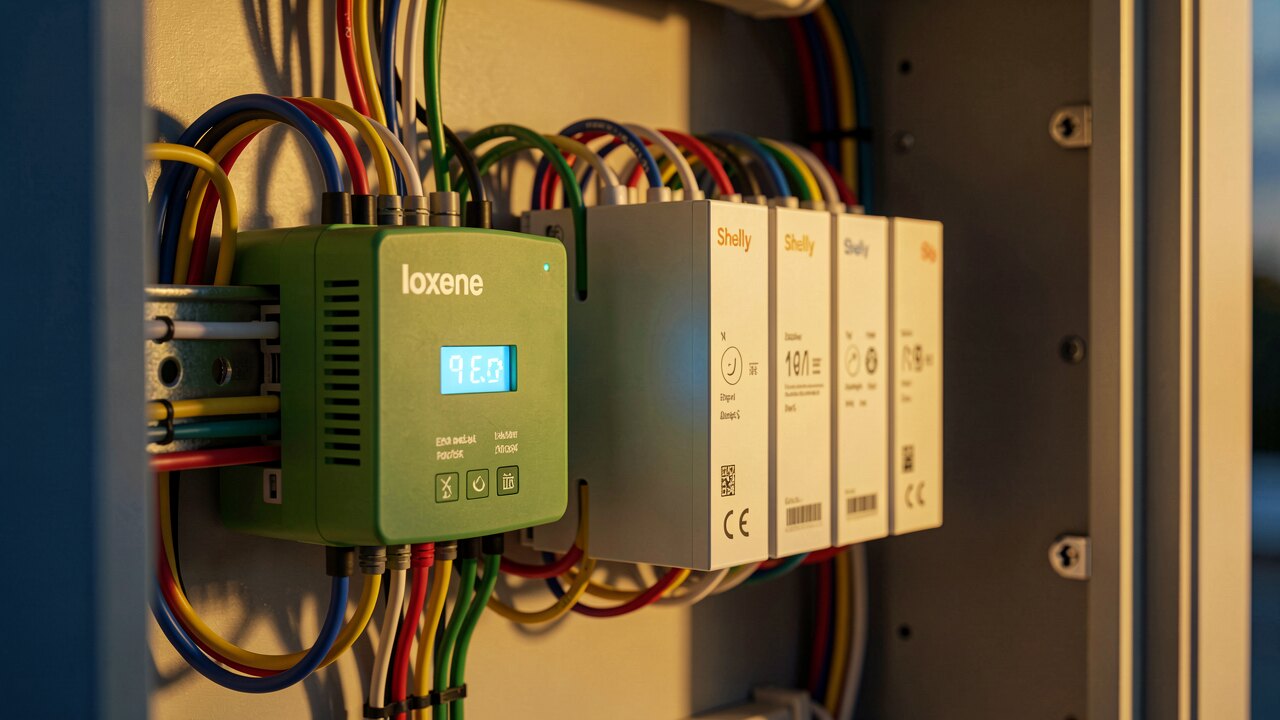
Coastal Mauritius, Rodrigues, Seychelles and the Maldives are among the harshest environments for outdoor electrical equipment. Specify for corrosivity category C5-M (marine) coatings on enclosures, sealed cabinets with filtered or closed-loop cooling rather than open-air ventilation, and stainless or coated fixings throughout — salt-laden air destroys standard powder-coated steel and unprotected terminals in years, not decades. High ambient temperature and humidity mean the HVAC is not optional: lithium cells lose calendar life fast above roughly 30–35 °C, so budget for the parasitic cooling load in your business case. For the cyclone season, mount and anchor the enclosure to withstand your site's design wind load, keep it above the local flood level, and agree a safe shutdown state. Fire safety and separation distances should follow the manufacturer's certified installation manual and be cleared with the local fire authority early — retrofitting clearance around an installed container is expensive.
On an island grid a peak-shaving battery rarely earns its keep from demand charges alone, so plan the extra uses at design time rather than after. Diesel offset: hotels and industrial sites with standby gensets often run them during peaks or during outages; a battery can take the short events entirely and cut genset run hours, fuel and maintenance. PV self-consumption: if you have rooftop PV, the same inverter can absorb midday surplus and release it into the evening kitchen and lighting peak, which matters because tropical PV output collapses hours before a hotel's evening load does. Ride-through and backup: a battery with grid-forming capability plus a transfer arrangement can hold critical loads through short interruptions — but backup reserve is capacity you cannot use for shaving, so decide the split explicitly. Load shifting is the cheapest of all: moving laundry, pool pumps and ice-making off the peak window costs nothing and shrinks the battery you need to buy.
The physics are identical across the Indian Ocean but the commercial case is set by each utility. Réunion is served by EDF SEI under French regulation, with its own tariff structure and grid-connection rules for storage. Seychelles is served by the Public Utilities Corporation (PUC), the Maldives by STELCO in Greater Malé and Fenaka in the outer atolls, and Madagascar by JIRAMA; Rodrigues is supplied by CEB. Where supply is heavily diesel-based and reliability is variable — typical of resort islands and outer atolls — the value of a battery shifts away from demand charges toward avoided fuel and avoided outage cost, and the sizing changes with it: longer duration, more emphasis on grid-forming capability. In every case the first document to obtain is the applicable tariff sheet with its demand-charge definition, and the second is the utility's technical connection requirements for storage inverters.
 Charge Director
 Automixer
 BESS Engineer
 PV Watcher